

Complexity, Care, and Inquiry
By Mind-Body Guest Blogger & Herbalist, Julie Wise
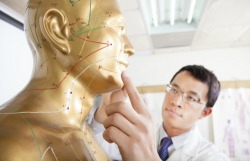
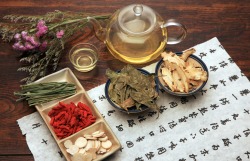
Before seriously exploring herbalism and TCM, I had this idea that medical care was something that I passively experienced, something that happens to me. When I began to meet more acupuncturists, Doctors of Traditional Chinese Medicine, and clinical herbalists, I noticed that we had a different relationship than the typical allopathic doctor/ patient dynamic. The symptoms and stories I shared seemed to carry more weight; practitioners were invested in every word I was using and how I related to my body and energy.
In my old reference book of homeopathic materia medica (that I refer to more out of novel curiosity rather than necessity), the diagnostic semantics are notably focused on the complex, sometimes hard-to-describe lived experience of the patient. Some of my favorite examples are these three descriptions of vertigo, among many: “vertigo; sensation of air or wind passing through head,” or “vertigo; sensation of head being stirred by a wooden spoon”, or “vertigo; walls of house seem to be falling in.” Or, take these instances of different sensations of coughing: “coughing; overpowering, as if larynx were tickled by a feather in the evening before sleep”; “coughing; aggravated by reading aloud”; “coughing; touching the canal of the ear.” These eccentric medical descriptions may seem completely redundant to some, but their specificity implies that only certain readers or patients will really understand the lived experience of that symptom. I was fascinated when I first found this book because the attention to detail in personal experience felt unfamiliar, like it had been missing from most of my allopathic medical treatments up to that point.
Similarly, I recently had an intake appointment with a new acupuncturist. After explaining my symptoms, focusing on my periodic episodes of tachycardia (racing heart), she left the room for a moment, then asked me this: “Does your heart ever feel empty or hollow, like it’s been scooped out?” I couldn’t help but laugh a bit. I would never think to describe my bodily experience in that way, but yes, that’s exactly what my heart felt like sometimes! She nodded and wrote some notes down. I was giddy with the feeling of being thoroughly understood by my clinician. Like my slightly antiquated leatherbound homeopathy book, Traditional Chinese Medicine and acupuncture give space for this kind of detail in fascinating and refreshing ways. This is certainly not a claim that acupuncturists are the only kind of medical practitioners with this keen attention to patient experience, but rather an ongoing observation that the specificity of inquiry from TCM practitioners towards patients often results in new insight.
Our bodies are unimaginably complex, and further understanding seems to only put forward more questions and more complexity. I’ve witnessed all kinds of TCM practitioners embody this detail-oriented curiosity, and they seem to acknowledge (and enjoy, perhaps) this complexity by engaging the patient on an equally complex, or thorough, scale. Opening up to that degree of inquiry results not only in effective treatment, but also better understanding of the intricacy existing within each of us.